
Pfizer:
Reframing Sickle Cell Pain
Peer-to-peer education designed to dismantle emergency department misconceptions about sickle cell patients.
Campaign and concept work developed inside MLR and legal review — proof that a process-heavy environment doesn’t have to flatten the idea.
company
Pfizer
role
Creative director · Client management
deliverables
Concept: SCDTruths · Educational platform · Video series · Clinical print advertisements · Point-of-care materials · Medical congress exhibit
agencies
Eveo, frog design (both Capgeini Invent companies)
Challenge:
the audience is the obstacle
Pharma and healthcare creative operates under Medical, Legal, and Regulatory review. Every claim is substantiated, every visual is scrutinized, and the cycle runs long enough that work tends to get more cautious with each pass — until nothing distinctive survives.
The Pfizer sickle cell campaign had the opposite problem: the audience, not the regulator, was the obstacle.
Emergency department physicians held entrenched misconceptions about sickle cell patients — mischaracterizing pain crises as drug-seeking, carrying unconscious bias into treatment decisions, and working from outdated knowledge of sickle cell disease (SCD) management. Those beliefs were a barrier to both patient care and adoption of Pfizer’s new SCD treatment. The campaign had to change minds in a skeptical, time-pressed audience — using voices they would actually trust.

Solution
The strategy was research-first: an insight-discovery phase surfaced the specific misconceptions driving poor care, and everything downstream targeted those root causes rather than symptoms. Because entrenched beliefs don’t yield to brand messaging, credibility had to come from peers — we recruited rare sickle cell disease (SCD) specialists, emergency medicine opinion leaders, and patient advocacy voices, and built the “SCDTruths” video series and educational platform around them.
Working inside MLR shapes the design process itself. My creative partner (creative director, copy) wrote and I built for review: video interviews with those experts, graphics traceable to source, formats that held together through edits, and a site hierarchy with enough give that a reviewer’s addition wouldn’t collapse the layout. Anticipating the review pass was what let the work stay sharp through it.
Campaign
“What’s your Sickle Cell Disease truth?”
As the creative director, visual, I concepted the peer-testimony framework the campaign was built on, then developed it with my creative partner (creative director, copy) and a team of copywriters, art directors, designers, and a medical writer.
The campaign ran across five components: the SCDTruths educational platform, a video series, clinical print advertising, point-of-care materials, and a medical congress exhibit.

SCD Truths EDUCATIONAL PLATFORM
Co-art directed and co-designed with the art director and visual designers. Copy by the medical writer and medical copywriters.
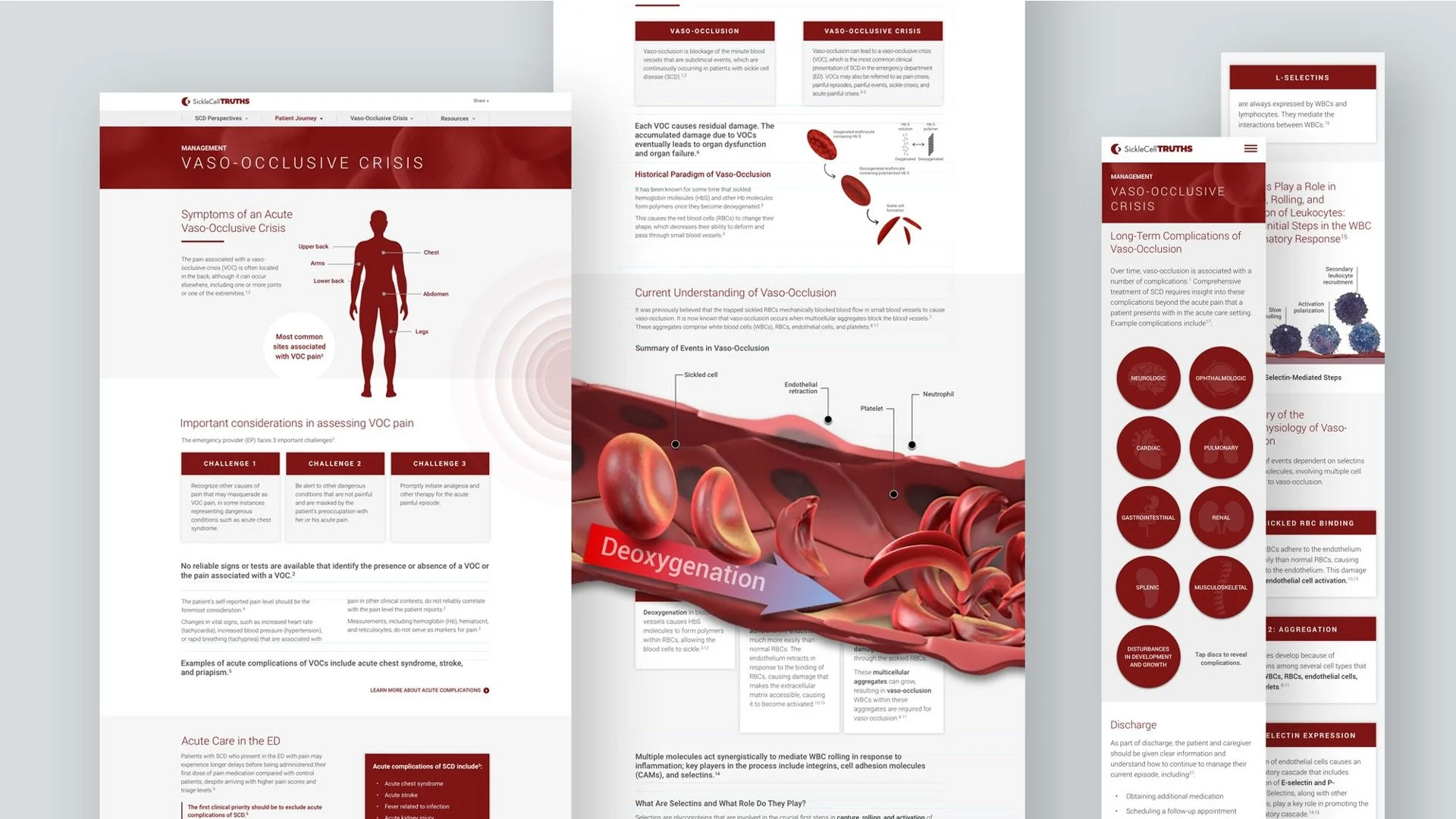
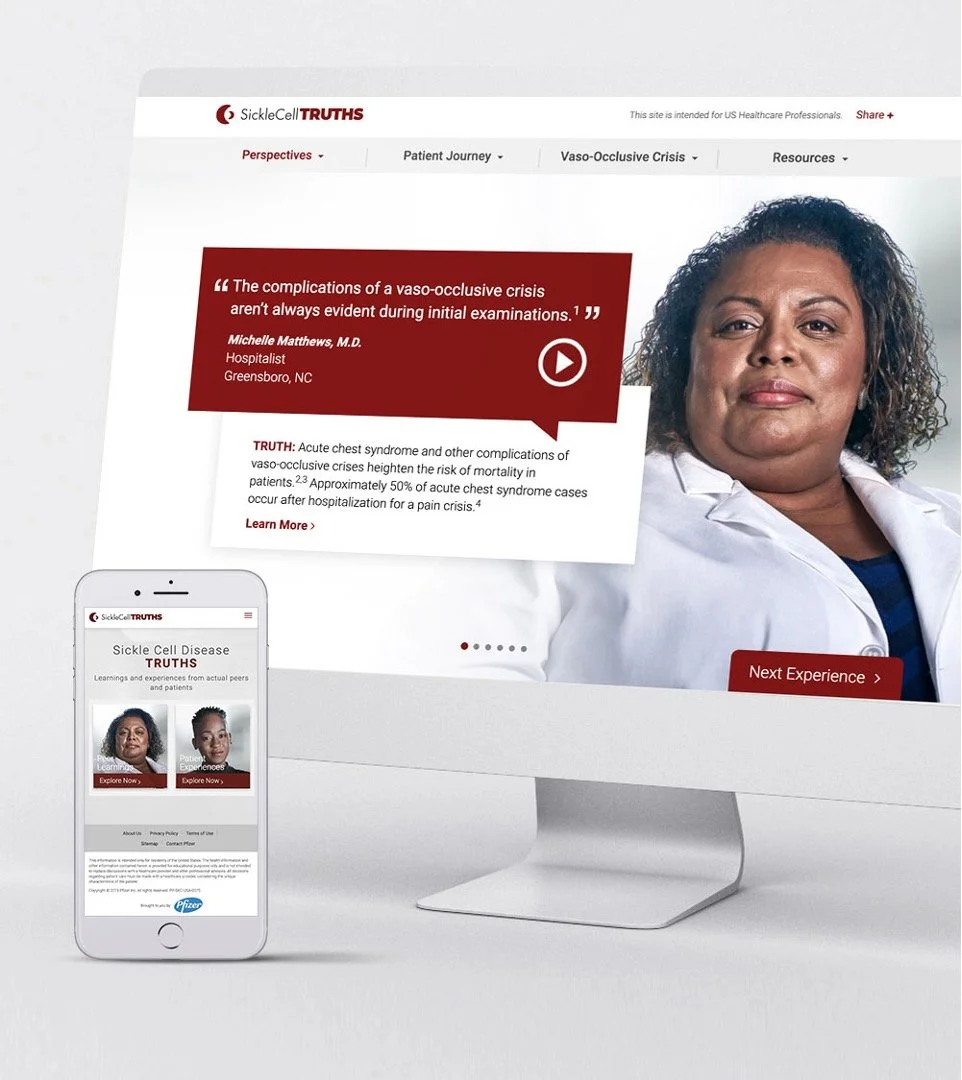
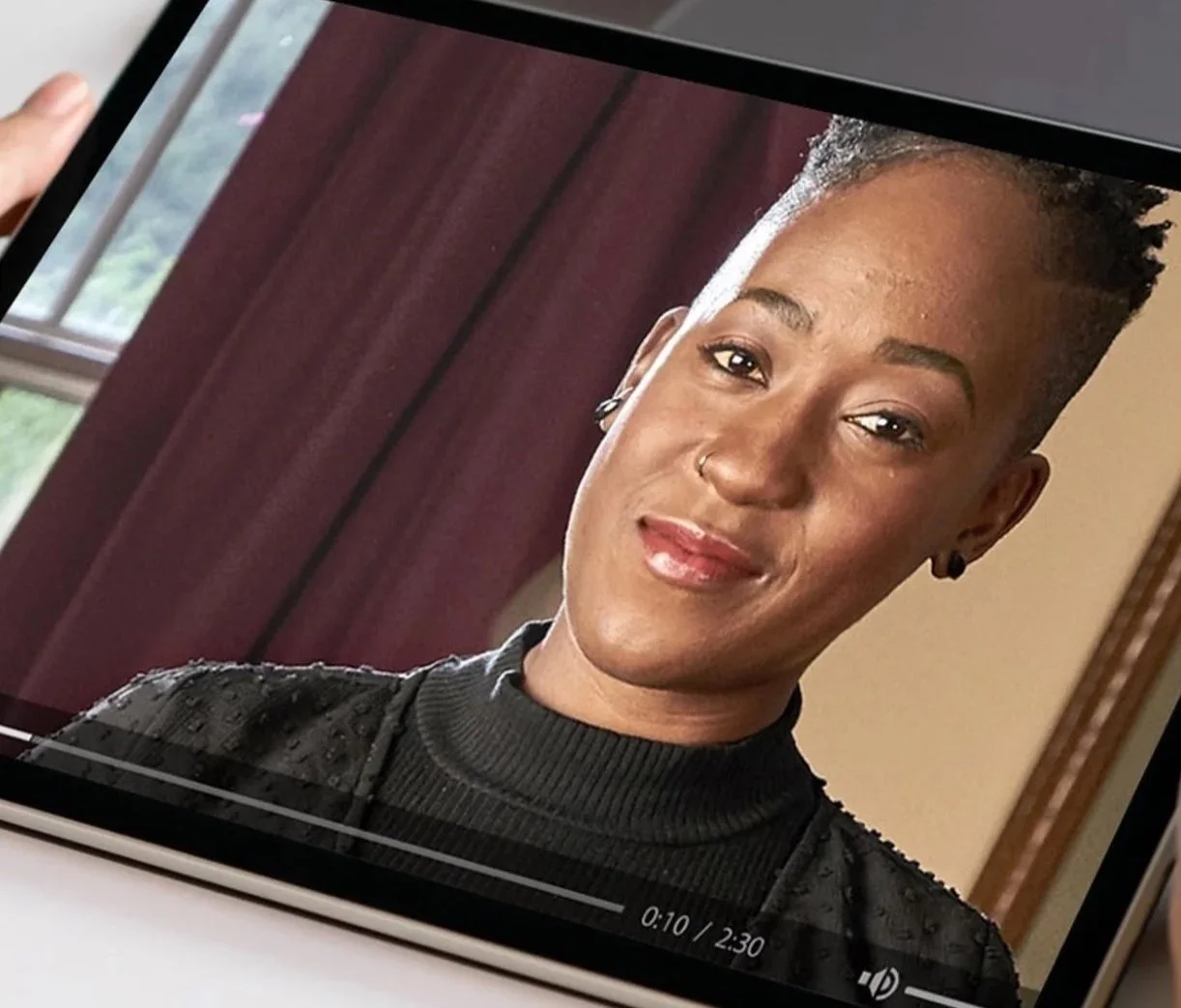
(per confidentiality, only video stills depicted)
VIDEOS
SCD specialist and key opinion leader (KOL) testimony addressing misconceptions directly, on camera. Scripts by the medical writer; shoot art directed by the medical writer and my creative partner.
Outcome
Clinical trial results ended the program before launch. Pfizer retained the complete campaign strategy and creative assets for future use.