Marketplace design: Decorist
Professional interior design, bought sight unseen, for a flat fee.
client
Decorist (startup)
role
Creative lead, founding team
deliverables
Platform architecture UX/UI
Art direction
Campaign creative
employment
Independent, on retainer
Challenge
Interior design is bought on trust. You meet a designer, they walk your space, you get a feel for whether they understand what you want — and only then do you commit.
Decorist removed all of that. Customers picked a designer from a profile, paid a flat fee upfront, and waited for a room from someone who would never stand in it.
Every product decision came back to one question: what must be true before a stranger will pay upfront for a room they can’t yet see?
WHAT I OWNED —
CONCEPT TO ACQUISITION
As the company gained momentum I also art directed photo shoots and designed creative for the site and marketing campaigns.
Every decision meant balancing user needs, business goals, creative intent, and technical constraints.
As the creative lead, founding team, I owned the complete user experience: early UX and CX research, platform design, launch, and iteration. I worked directly with the founder, built and managed local photography and creative teams, and led distributed development teams.
Lowering the cost of saying “yes”
You cannot ask someone to trust a stranger with a whole room on day one. So the product asked for less: a date, a designer, a flat fee — three small commitments instead of one large one.
The tiers did the same work from the other side. Matching customers with designers across three experience levels — Classic, Elite and Celebrity — with pricing set against each level let people calibrate their own risk. Professional design at a price point they chose, with the tradeoff made explicit instead of hidden.
1. Select a date and time

2. Choose a designer

3. Shop and decorate
What people hesitated on
IN THE BEGINNING: NAVIGATING NEW TECHNOLOGY
We tested the journey repeatedly with in-person and online focus groups — watching where people hesitated, not just asking whether they liked it. Hesitation is more honest than opinion. People will tell you a page is beautiful and still not click.
WHERE IT STARTED
The hesitation. When the Decorist team began building its platform (2014), the concept of replacing historically in-person services with a digital platform was a new process.
The starting conditions. In 2014 nobody had bought interior design this way. There was no established pattern to borrow from and no competitor behavior to observe — we were asking people to learn a new process and trust it at the same time.
What we assumed. That the platform was self-explanatory. It was not. Users were confused, confusion became anxiety, and they disengaged.
HOW IT EVOLVED
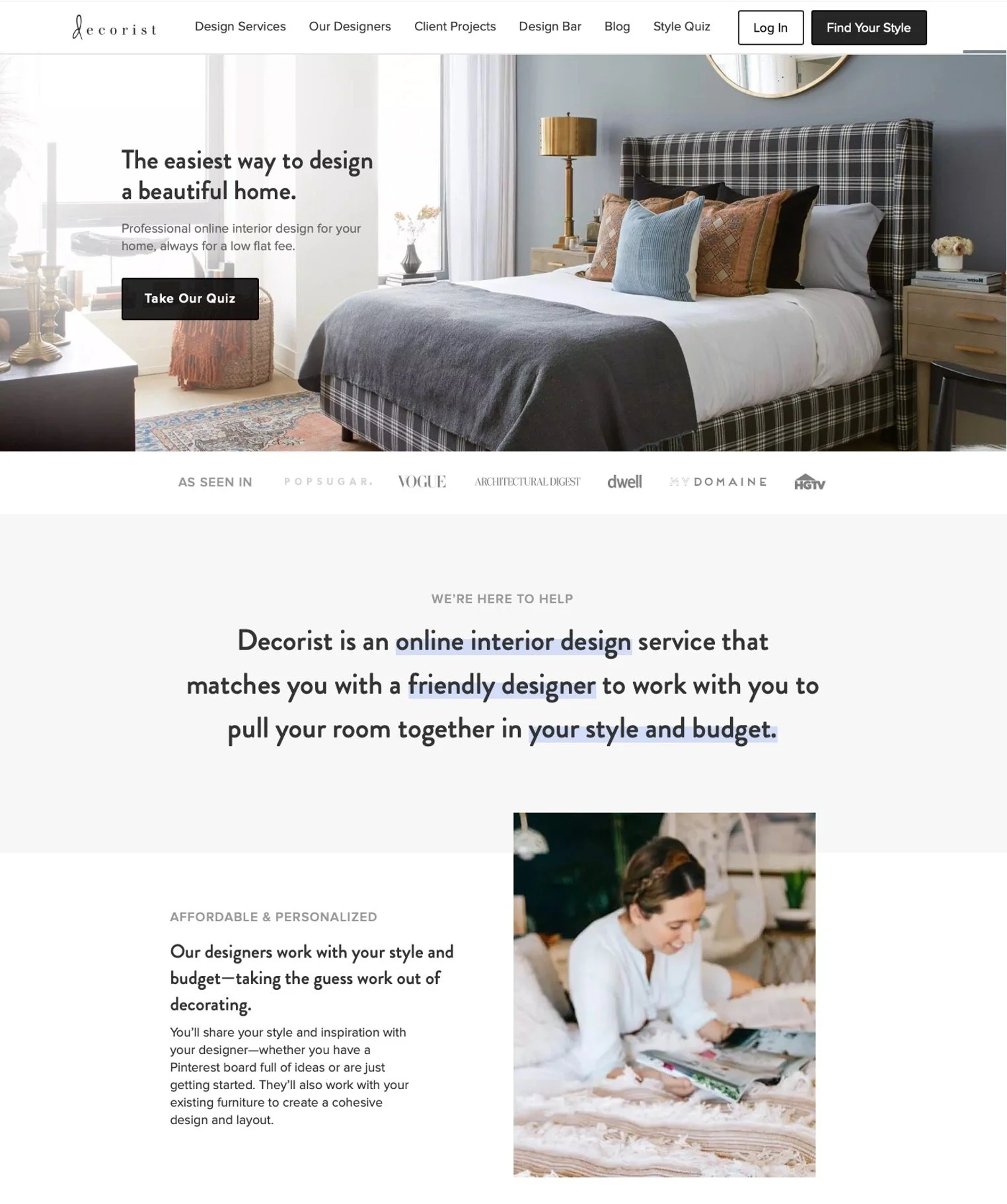
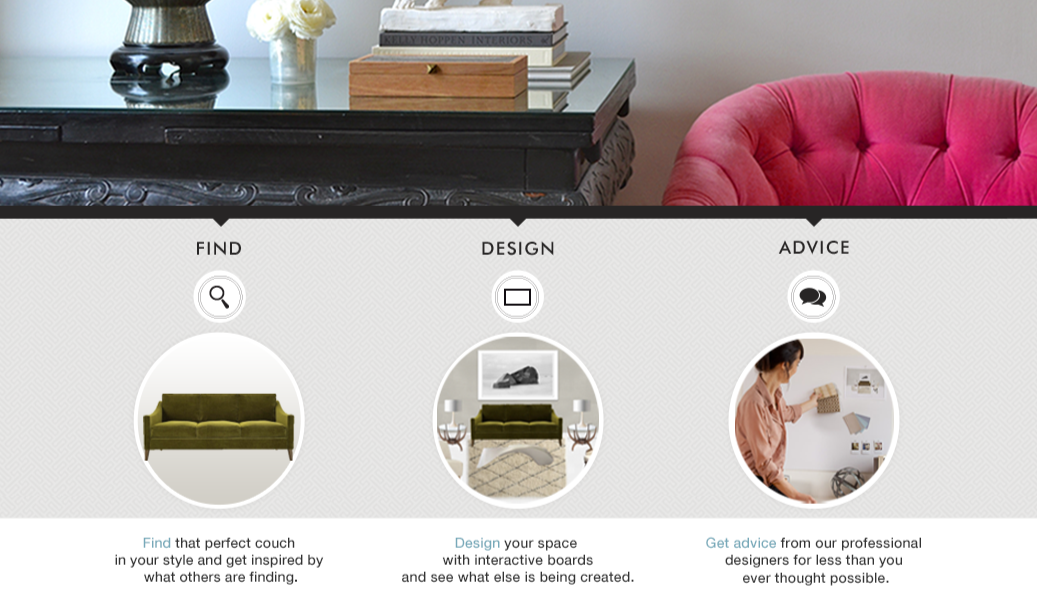
What we built in response. If you cannot shake someone’s hand, every other signal must work harder. We built four new parts of the product, each answering a specific objection — and made them easy to navigate.
What we saw after. The style quiz delighted people so much they forgot they were on an unfamiliar platform. Once they finished it, they were curious about how to use their newly discovered style. It stopped being intimidating and became fun.
The four things we built
1. Style quiz
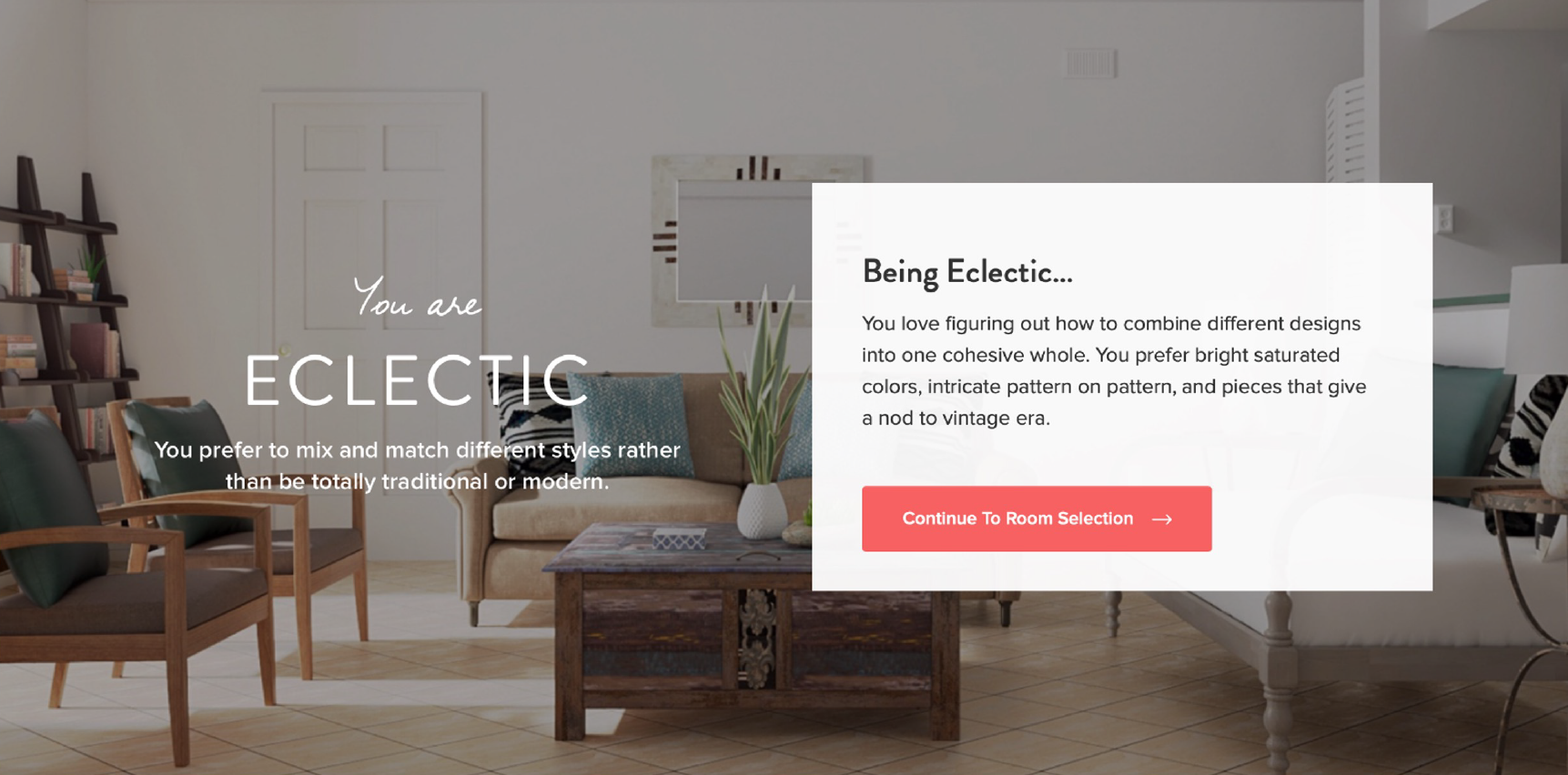
We added in an interior design style quiz. It created initial delight, engagement, and curiosity. It answers the objection “I don’t know how to describe what I want.” A quiz that told the user something about themselves earned attention that a form never would — and it gave us a vocabulary both users and interior designers used.
2. Designer profiles

Instead of just a head shot and a design philosophy blurb, we created full-page profiles that led with their work and style tags, so the choice for the user was a taste match rather than a résumé review. This answered, “Will this person understand my house?”
3. Design Q&A
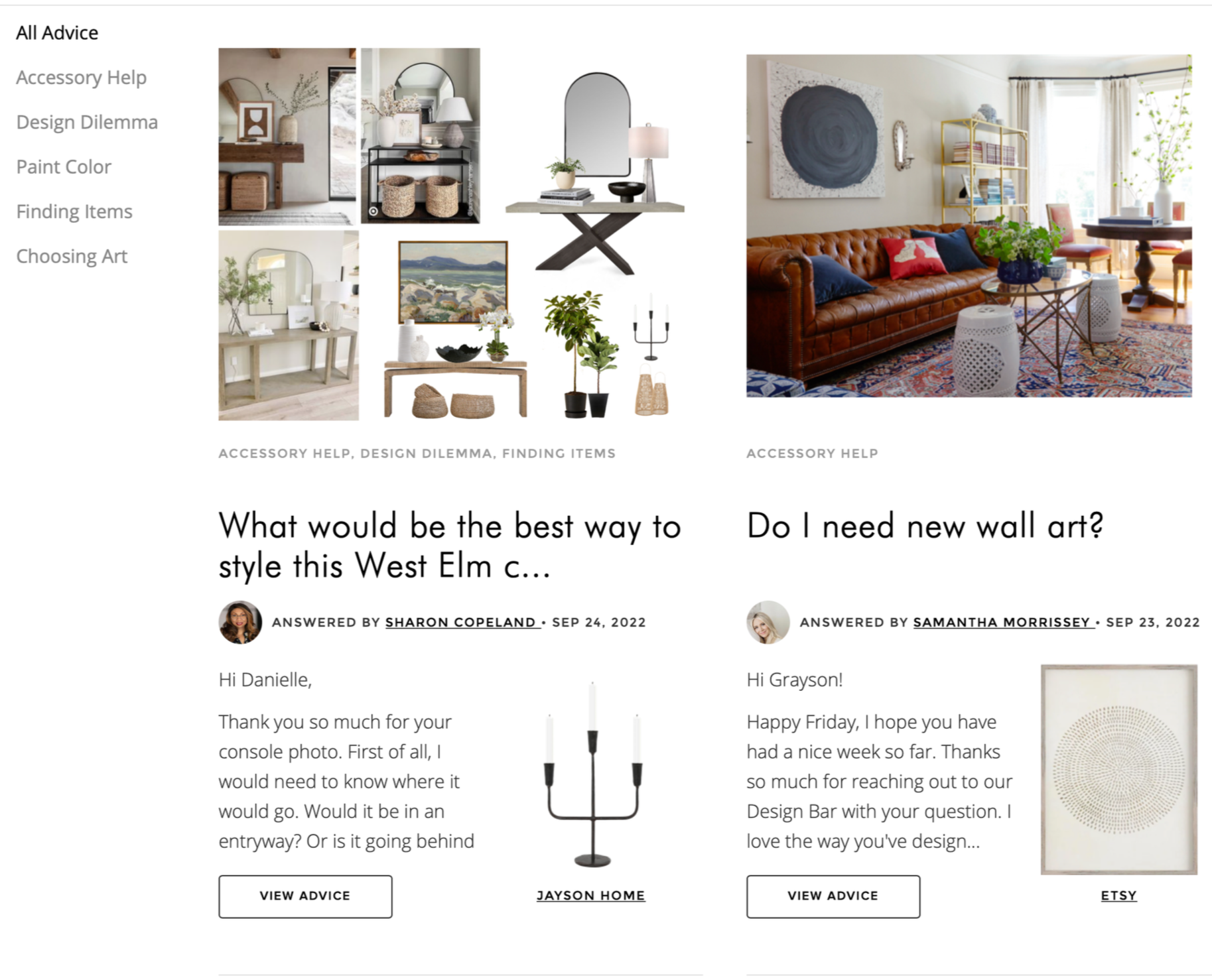
We added in a design Q&A to answer “What are these designers actually like?” Real designers answered real questions in public, for free — the least expensive possible sample of the service.
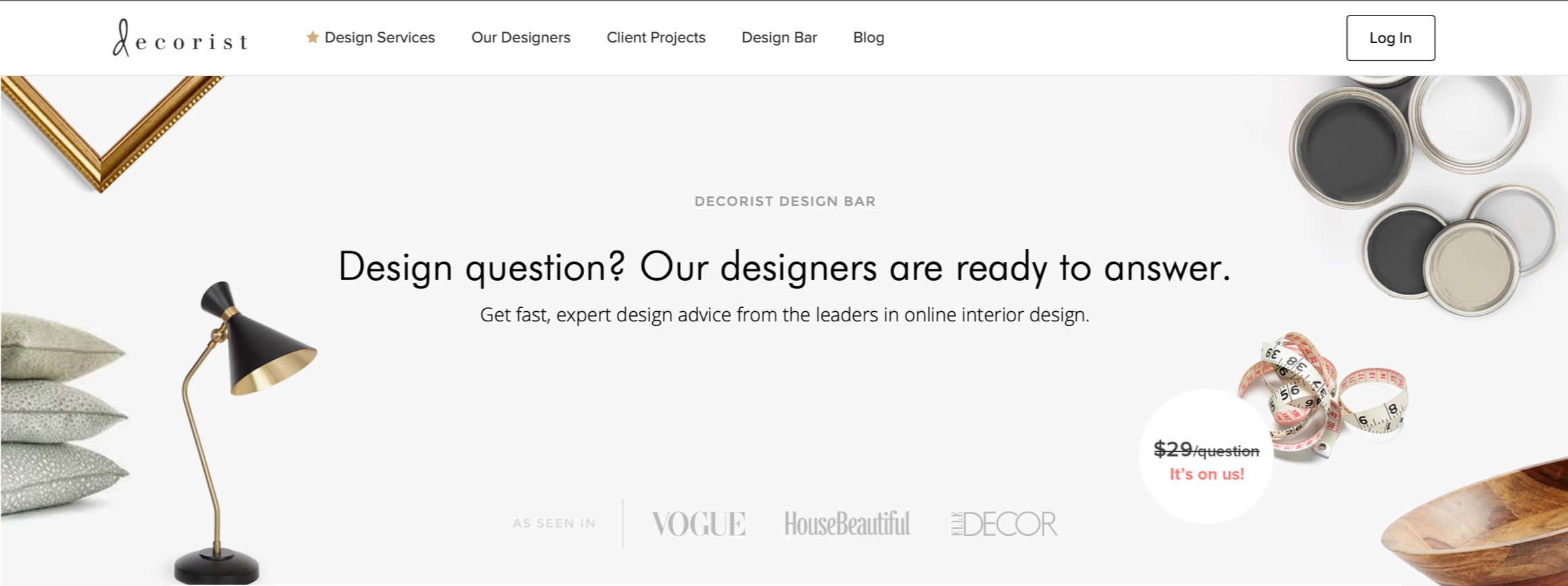
4. Video consultation
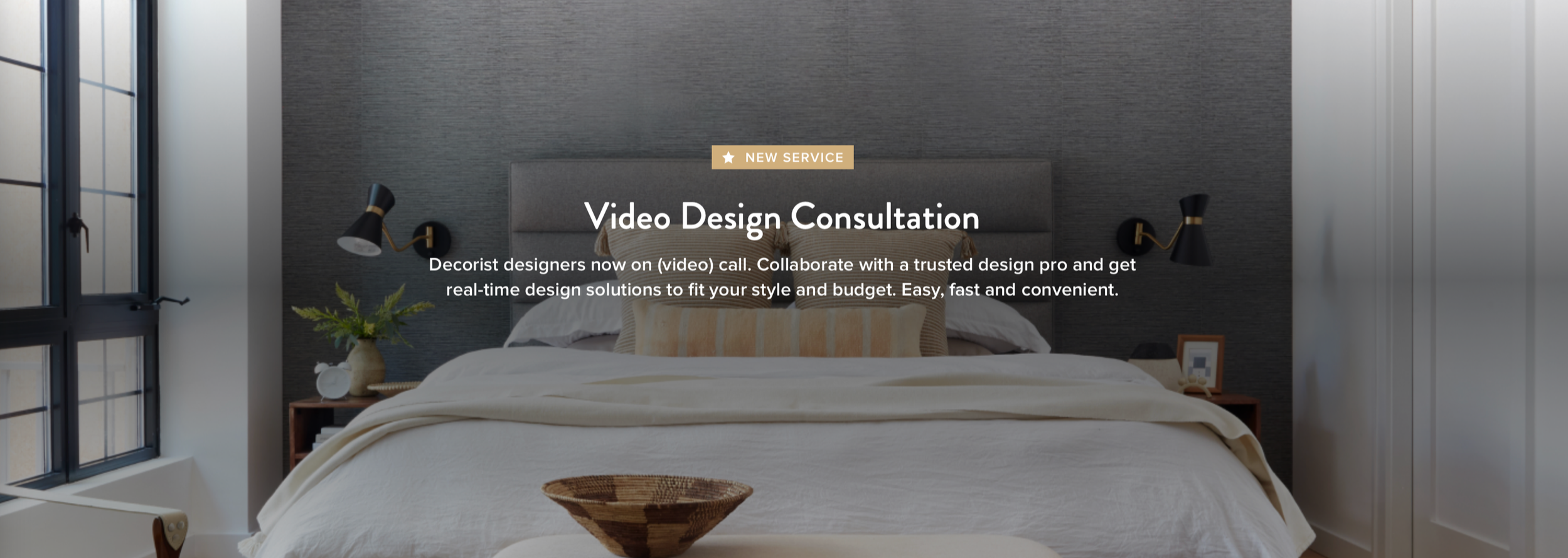
To answer “I still want to talk to a human.” For potential customers who needed a face before paying for a full package, this was the smallest version of the service we could sell.
It also familiarized customers with what the process would be like on a full package.
Later stage testing: purchasing a package
THE PROBLEM
The hesitation. After picking a designer, people would spend 20 minutes completing the entire intake form — including uploading photos of their current room — and still not buy.
What we had. More precisely, what we did not have: enough examples of past projects, or of the process itself, to show people what their money would buy.
Why it stalled. We were asking people to spend money on something they could not see or experience. The not-knowing was more financial risk than they would carry.
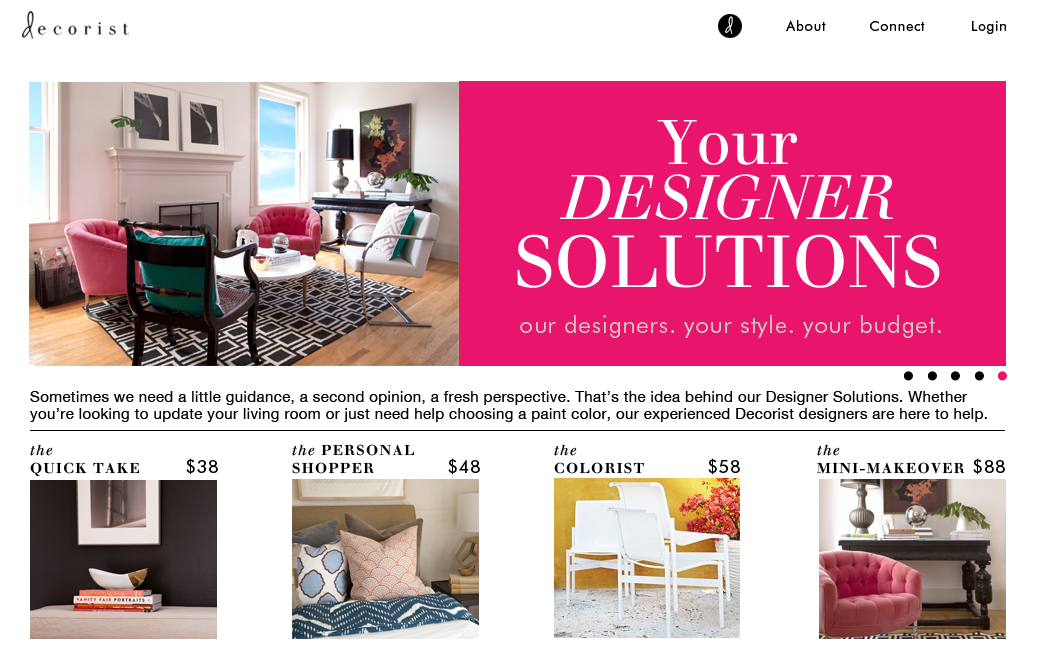
THE RESPONSE
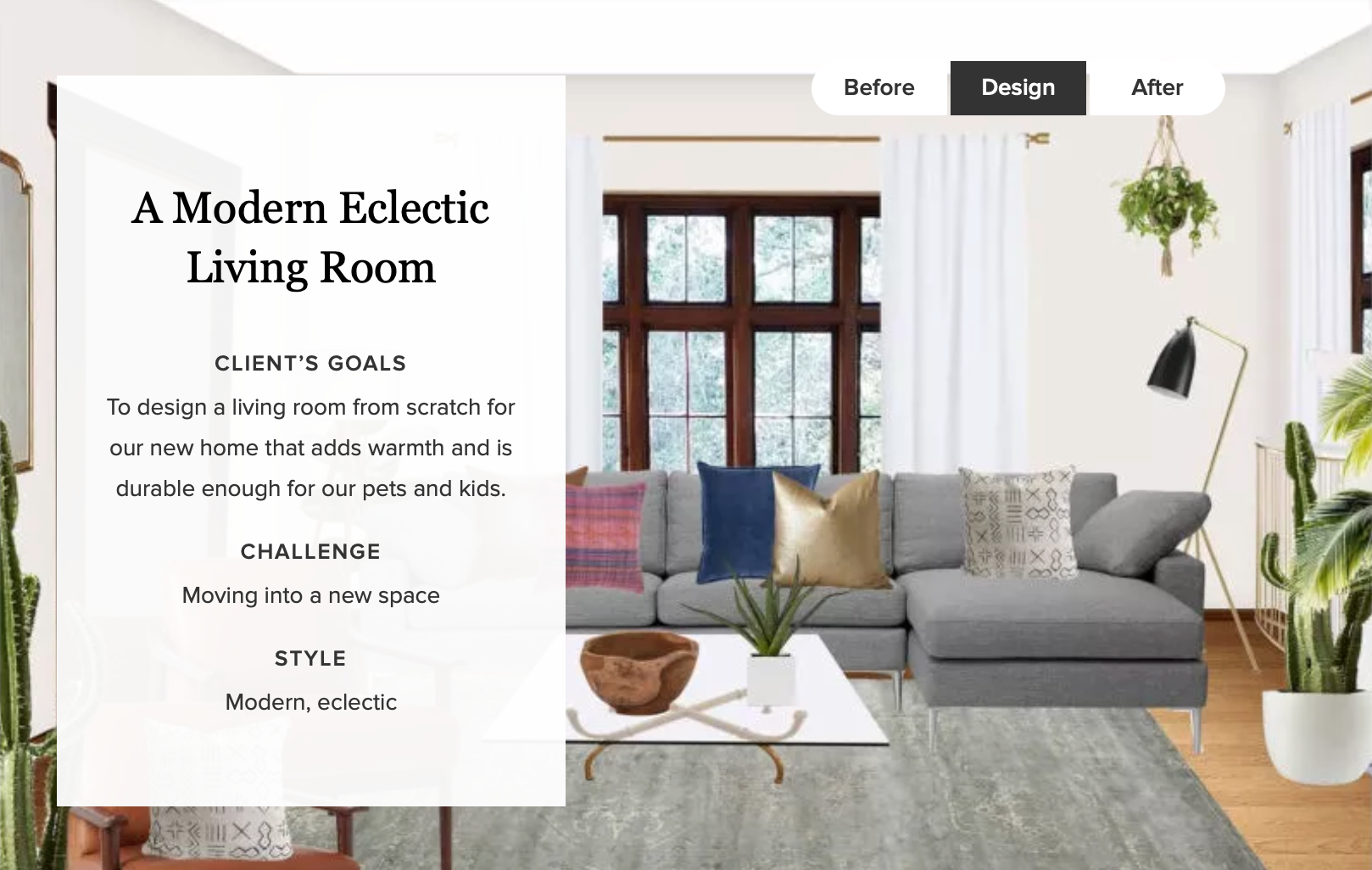
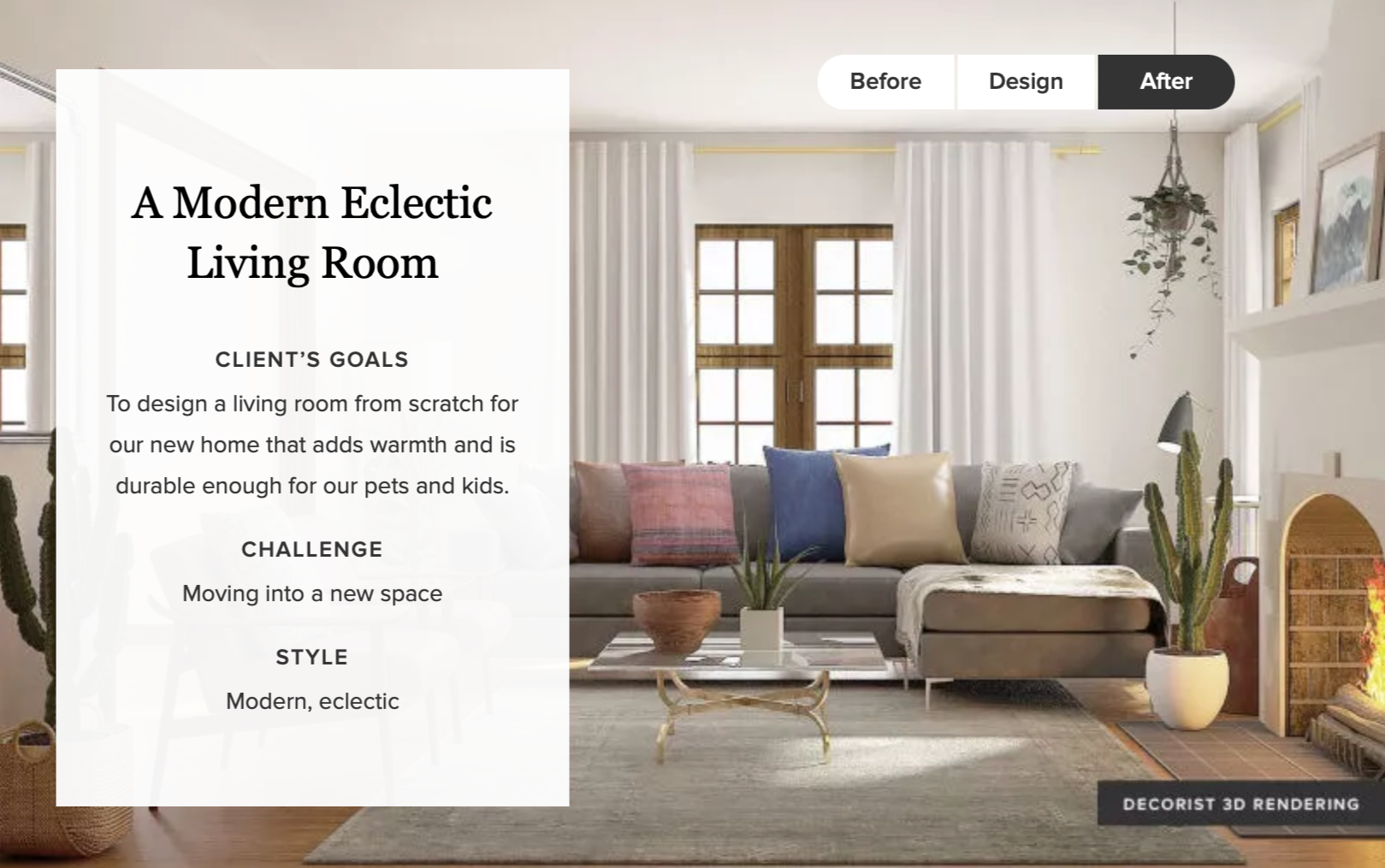
What we changed. We added a client projects tab spanning modern to traditional and classic to celebrity packages and gave every project a slideshow of the full makeover: the customer’s starting room, what the designer created, and what the customer bought and set up.
Why it worked. The intake form was never the obstacle. People were being asked to pay for something they could not picture. Once they could watch the process run end to end on somebody else’s house, the money stopped feeling speculative.
75%
of participants who viewed the client projects tab and at least one design-process slideshow went on to select a package, complete the intake form, upload their photos and check out — within 30 minutes.
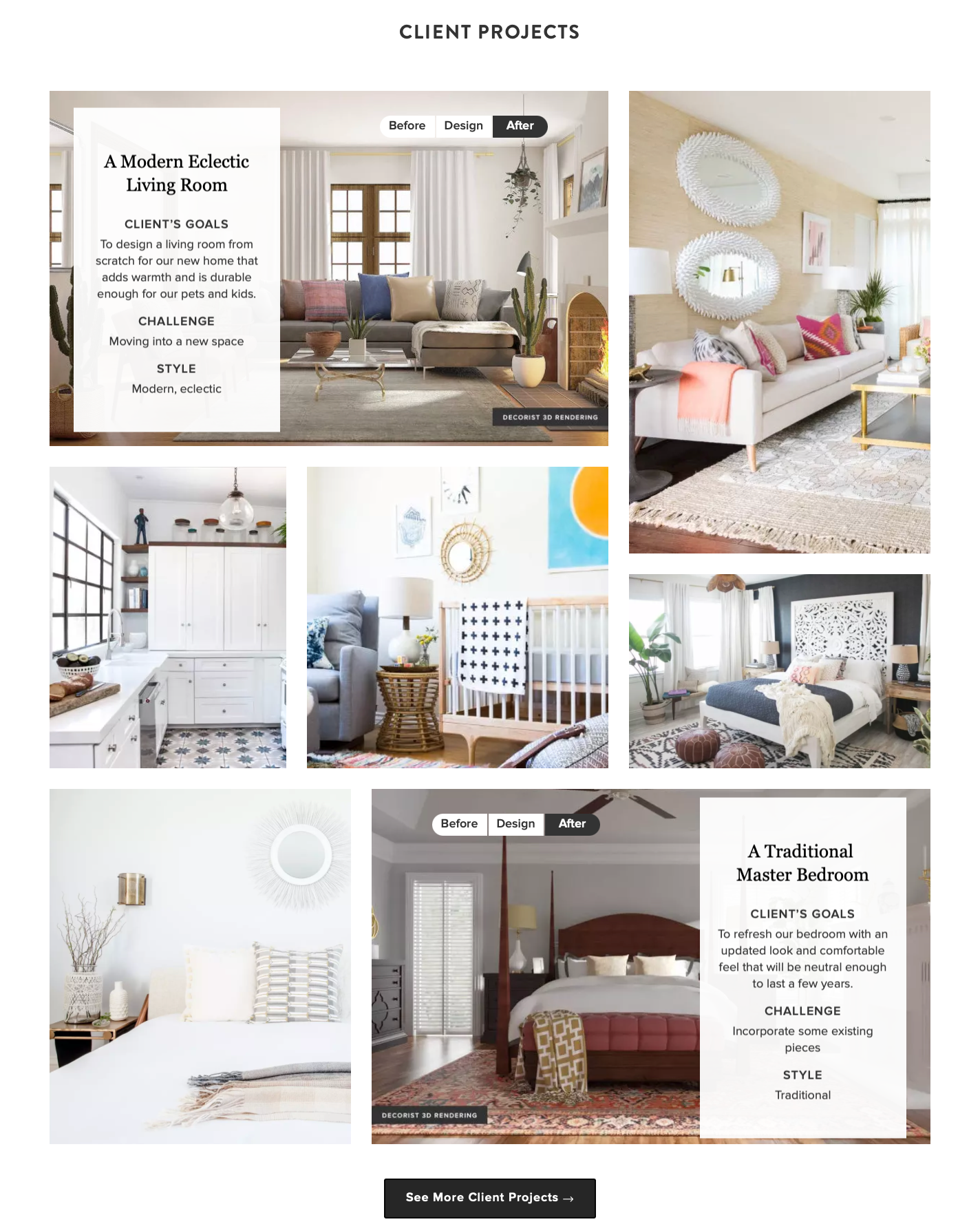
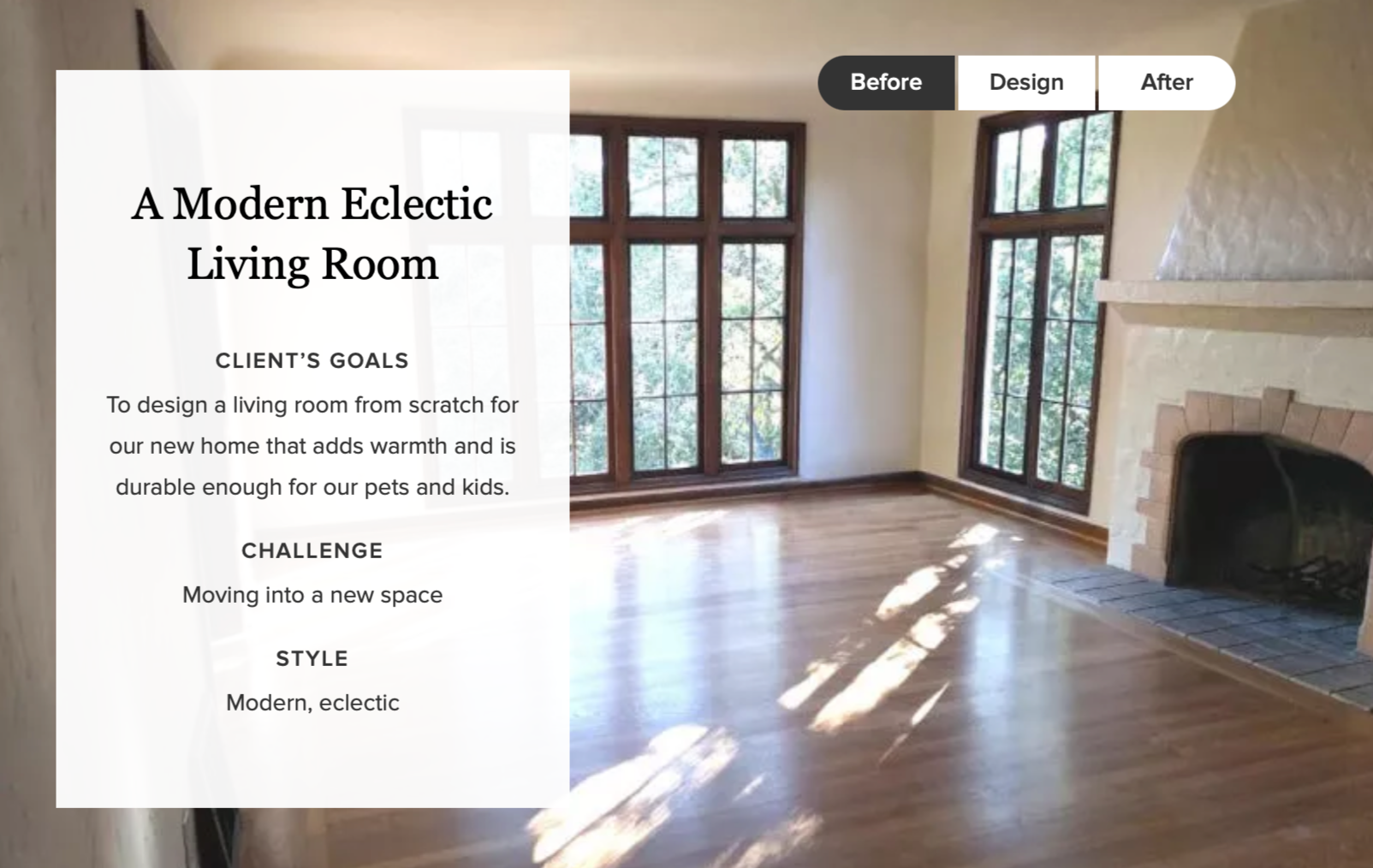
The slideshow that changed it
Every past project, published as three states: the room as it was, the design concept, and the finished space. Prospective customers could watch the whole process on somebody else’s house before risking it on their own.
-
![]()
Before
-
![]()
Design
-
![]()
After
What the model produced
4.9 stars by 3000 customers
“When I saw these magical 3D renderings of my space, I sort of lost my mind... during this entire process I’ve really trusted Jessica to create an amazing space... Jessica (and Decorist) really nailed it with the materials and balance of light and dark for my space. I cannot wait to begin working on this room!”
— Joanna H.
“Hiring an interior designer was completely out of the question for me... For $299, I was able to get paired with a super talented designer named Amanda Foster. The final concept was exactly the unique, eclectic style I envisioned.”
— Elena O.
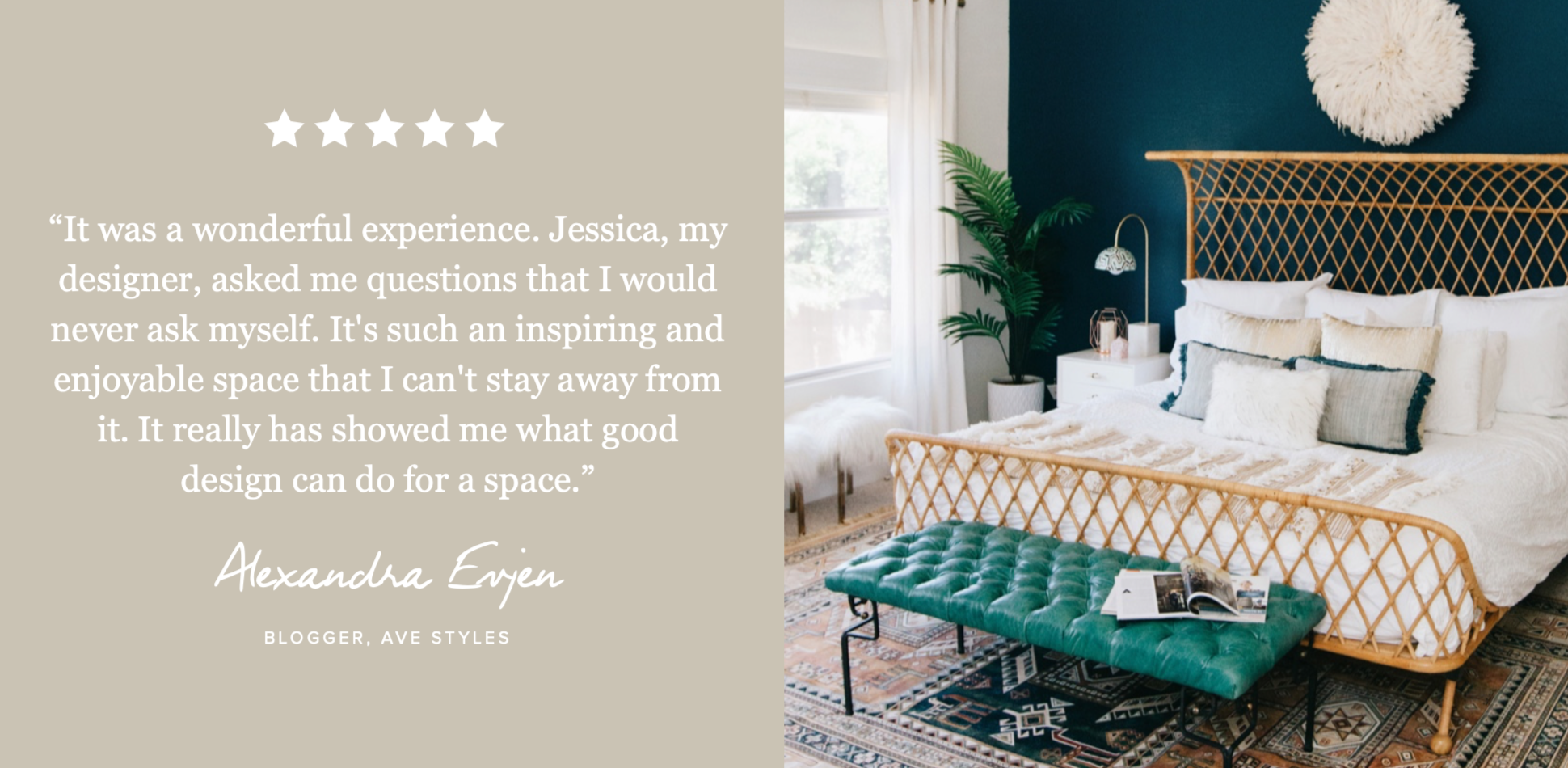
It also drew endorsements from lifestyle and design figures with large audiences of their own — useful reach, and a signal that the output held up to public scrutiny.

From startup to acquisition
Featured in Vogue, Dwell, Architectural Digest, HGTV, PopSugar. Winner of Architectural Digest’s “Innovation of the Year” award.
Acquired by Bed Bath & Beyond in 2 years.