
Behavioral change: Pfizer
Emergency physicians didn’t believe their sickle cell patients. Changing that meant borrowing voices they already trusted.
client
Pfizer
role
Creative director (visual)
Client management
deliverables
SCDTruths educational platform
Video series
Clinical print ads
Point-of-care materials
Medical congress exhibit
employment
Eveo, a healthcare communication agency (acquired by Capgemini Invent)
In pharma and healthcare creative, the obstacle is usually the review process. On this campaign it wasn’t.
Patients with sickle cell disease (SCD) suffer vaso-occlusive crises (VOCs) — painful events that frequently send them to the emergency department. Emergency physicians and hospitalists, working from limited knowledge of SCD, often read a patient’s urgent request for opioid pain relief as drug-seeking. Treatment gets delayed or under-dosed, and patient outcomes suffer.
Challenge: the audience is the obstacle
Two beliefs were doing the damage: that VOC pain wasn’t as severe as patients reported, and that opioid addiction was widespread in this population. Both are wrong, and neither was going to be corrected by a pharmaceutical company with a product to sell.
Those beliefs were also a barrier to adoption of Pfizer’s new SCD treatment. The campaign had to change minds in a skeptical, time-pressed audience — using voices they would actually trust.
Insight: the credibility had to come from somewhere else
My creative strategy was research-first. An insight-discovery phase surfaced the specific misconceptions driving poor care, and everything downstream targeted those root causes rather than symptoms.
Doctors, like most people, don’t respond well to being told they’re wrong. The campaign couldn’t correct them. It had to let them arrive somewhere on their own.
The experts weren’t asked to correct the record. They were asked to describe how their own perceptions of sickle cell patients had changed over time.
A skeptical physician watching that isn’t being told they’re wrong. They’re watching a peer who already reconsidered. We recruited rare SCD specialists, emergency medicine opinion leaders, and patient advocacy voices, and built the SCDTruths video series and educational platform around them.
The platform was deliberately unbranded — a central hub the audience could use without feeling sold to.
WORKING INSIDE MLR
Working inside Medical, Legal and Regulatory review shapes the design process itself. Every claim is substantiated, every visual is scrutinized, and the cycle runs long enough that work tends to get more cautious with each pass until nothing distinctive survives.
I built the framework to expect it: video interviews with the experts, graphics traceable to source, formats that held together through edits, and a site hierarchy with enough give that a reviewer’s addition wouldn’t collapse the layout.
Anticipating the review pass was what let the work stay sharp through it.
CAMPAIGN
What’s your Sickle Cell Disease truth?
As creative director, visual, I created the peer-to-peer education framework the campaign was built on, then developed it with my creative partner (creative director, copy) and a team of copywriters, art directors, designers, and a medical writer.
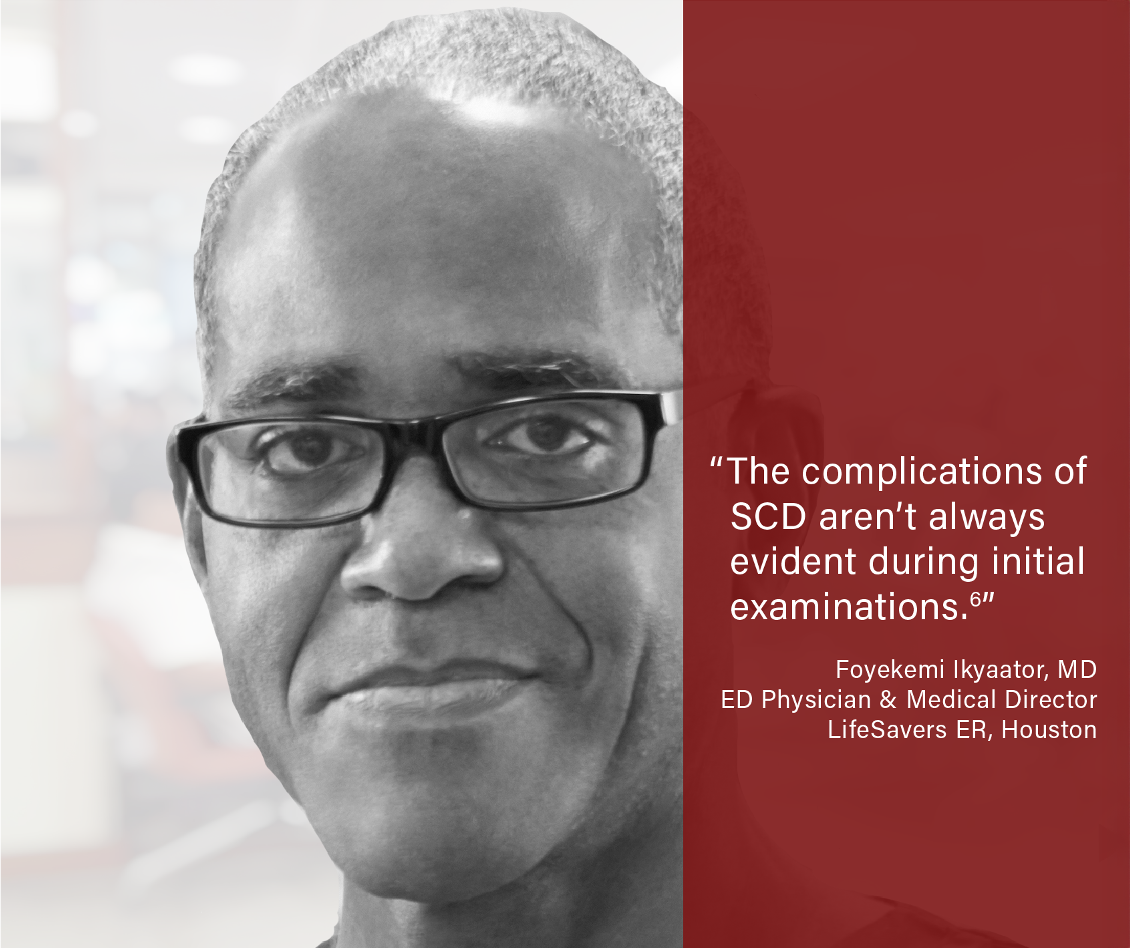
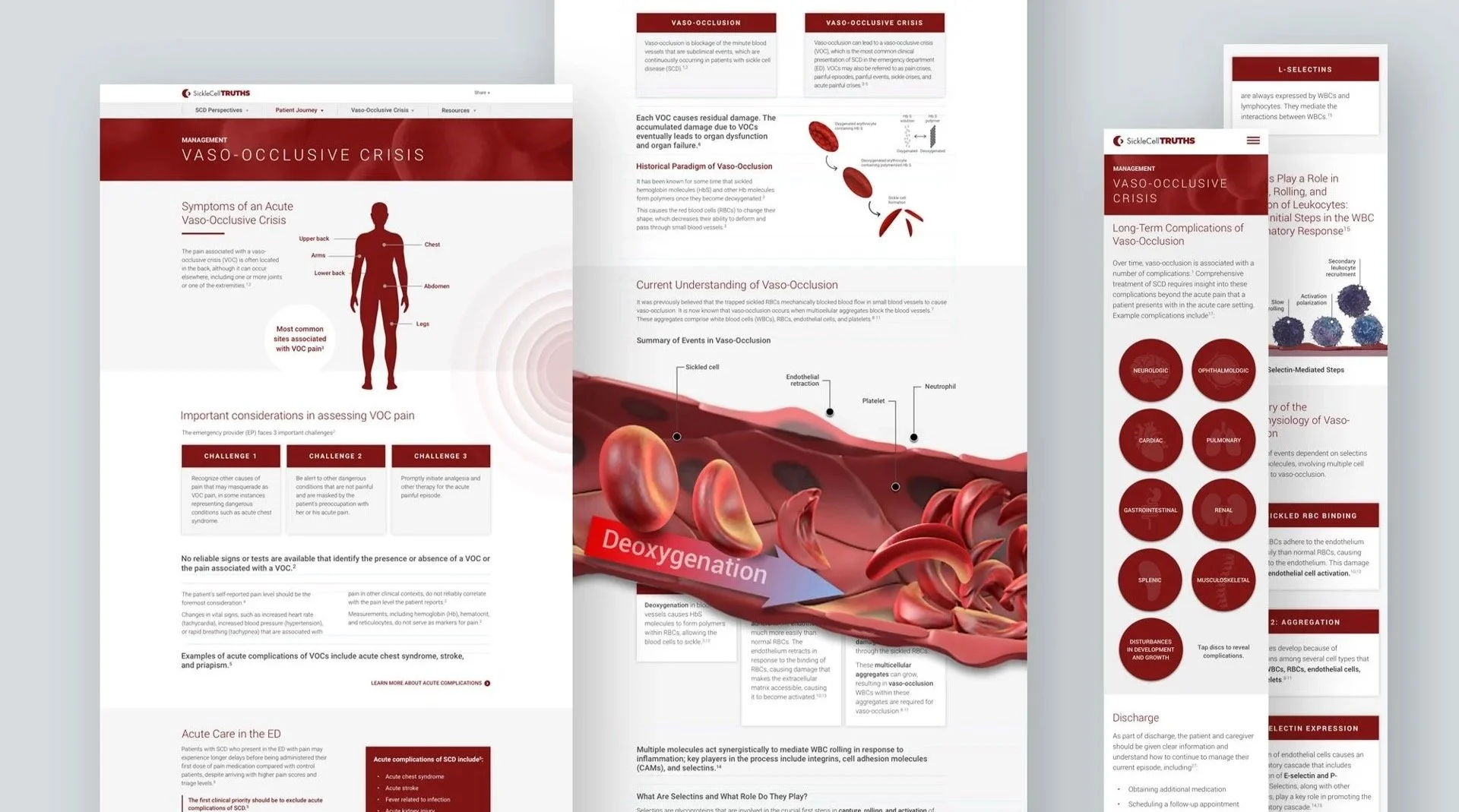
SCD TRUTHS EDUCATIONAL PLATFORM
A central unbranded hub carrying peer testimony, source-traceable graphics, and supporting educational material. Co-art directed and co-designed with two art directors and visual designers. Copy by the medical writer and medical copywriters.
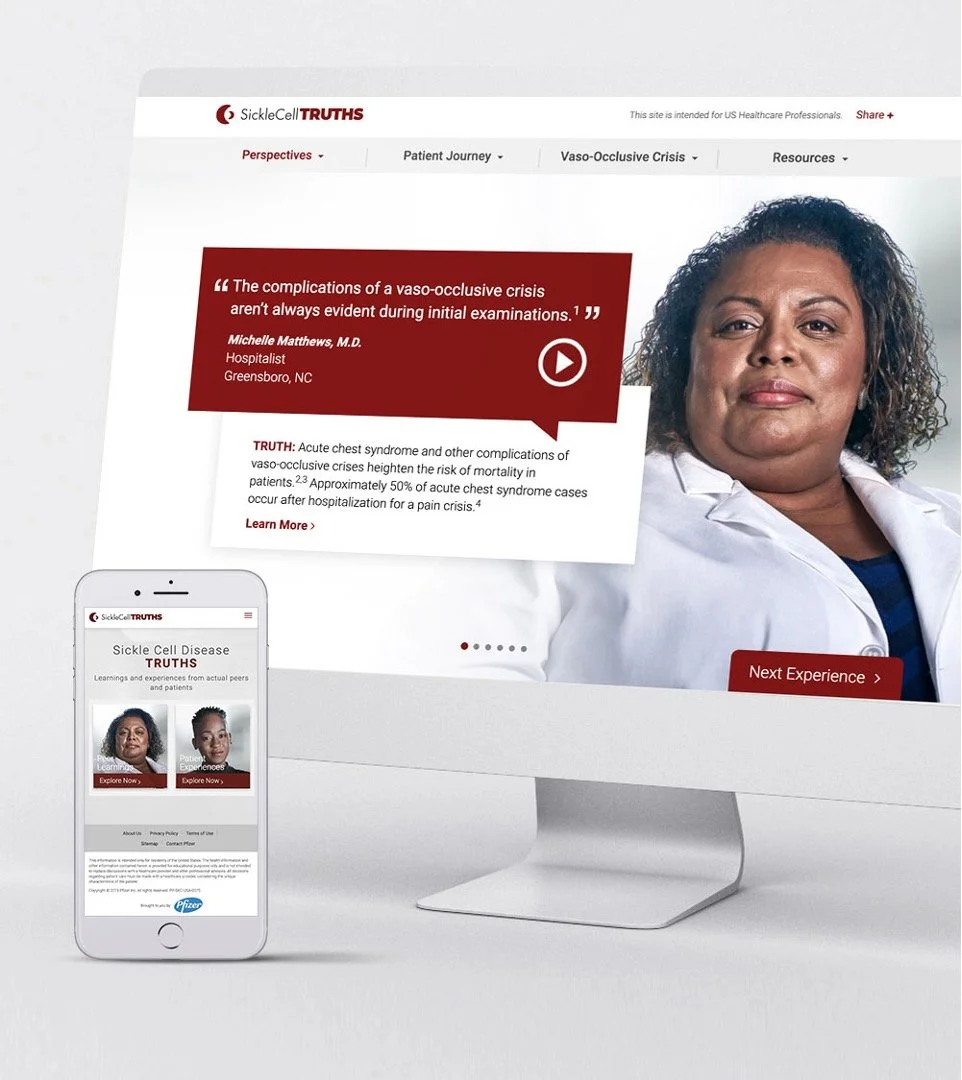
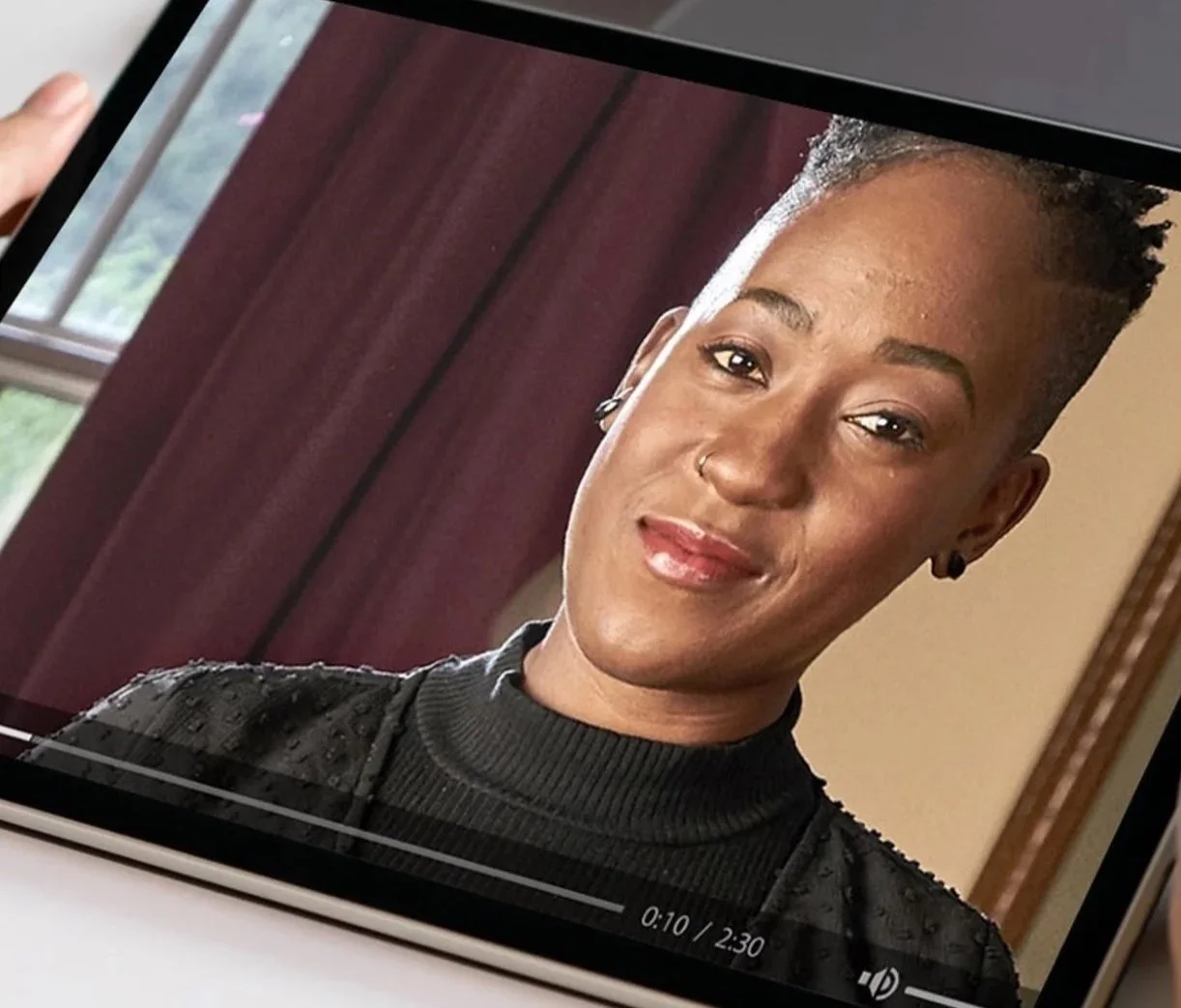
VIDEOS
SCD specialists and key opinion leaders describing, on camera, how their own understanding of sickle cell patients had changed. Scripts by the medical writer; shoot art directed by the medical writer and my creative partner.
CLINICAL PRINT ADVERTISING
Peer testimony carried into clinical journals and into the settings where treatment decisions get made. I collaborated with the copy and medical writers to ensure accuracy and created print ad placements.
MEDICAL CONGRESS EXHIBIT
Ahead of full launch, the peer-to-peer model I designed with two visual designers went live as an interactive booth at key medical congresses, with leave-behind materials and HCP education during the events
Outcome
Focus group testing showed that 95% of emergency department health care providers’ misconceptions about sickle cell patients changed after peer-to-peer education.
Clinical trial results ended the program before launch. Pfizer retained the complete campaign strategy and creative assets for future use.
95%
of ED providers tested reported changed beliefs